

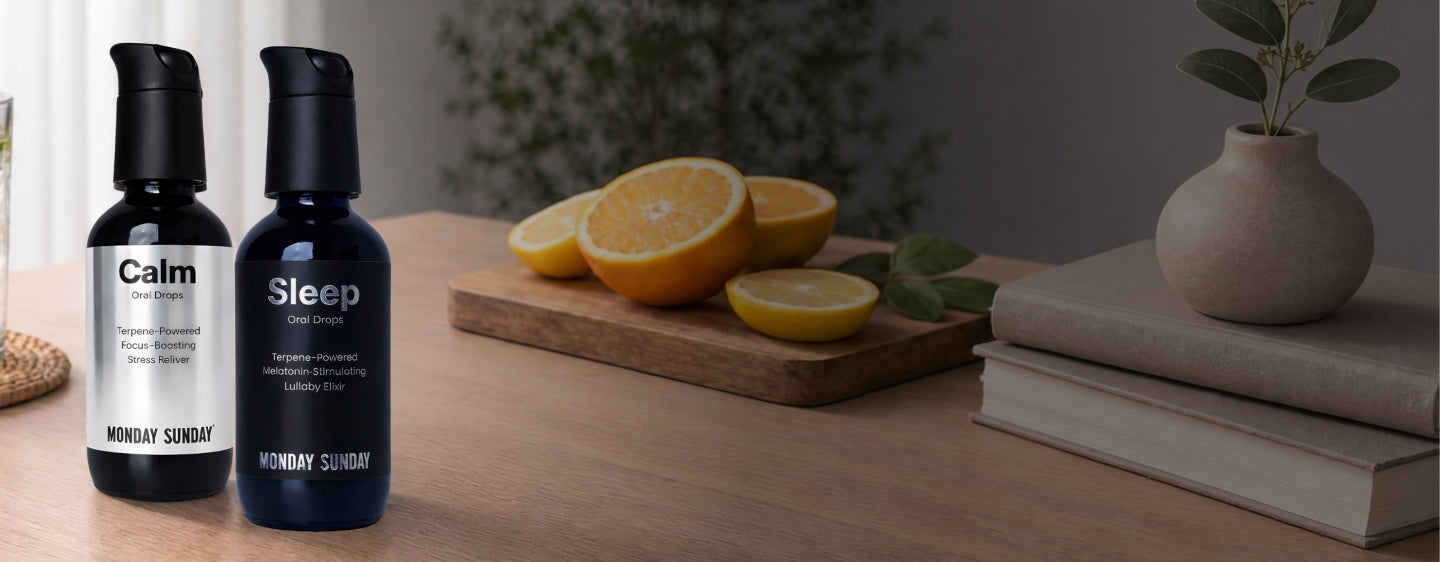
Our Terpenes

BETA-CARYOPHYLLENE
BETA-CARYOPHYLLENE is the distinctive spicy terpene of the kitchen spice rack.
Found in: black pepper, cloves + rosemary
Aroma: woody and spicy
In our range: featured in both the Calm and Sleep blends
Molecular formula: C15H24
Terpene notes describe general compound properties and aroma character — they are not claims of therapeutic effect.

MYRCENE
MYRCENE is among the most common terpenes found in herbal plants.
Found in: hops, mango, lemongrass + thyme
Aroma: fruity and clove-like
In our range: featured in the Sleep blend
Molecular formula: C10H16
Terpene notes describe general compound properties and aroma character — they are not claims of therapeutic effect.

LINALOOL
LINALOOL is the signature terpene of lavender fields.
Found in: lavender, coriander + sweet basil
Aroma: spicy and floral
In our range: featured in the Sleep blend
Molecular formula: C10H18O
Terpene notes describe general compound properties and aroma character — they are not claims of therapeutic effect.

LIMONENE
LIMONENE is one of the most abundant terpenes in nature — the compound that gives citrus peel its bright, zesty character.
Found in: citrus peel, juniper + peppermint
Aroma: citrusy and bitter
In our range: featured in both the Calm and Sleep blends
Molecular formula: C10H16
Terpene notes describe general compound properties and aroma character — they are not claims of therapeutic effect.

Made with Compassion
Crafted with care — born in Noosa, Australia.

Thoughtfully Formulated
Thoughtfully formulated — alcohol-free, vegan and plant-based.

All Natural
Herbal oral drops in an artisanal spring-water base.

100% Vegan
Ethical, plant-based solutions without compromising on effectiveness.
Our Herbs + Other Actives
References to traditional use reflect the history of these botanicals in Western herbal medicine — they are not proof of clinical efficacy. Linked research relates to individual ingredients, not to MONDAYSUNDAY products.

LEMON BALM
Lemon balm (Melissa officinalis), also known as Melissa Leaf, is a member of the mint family with one of the longest pedigrees in Western herbal medicine — records of its use as a calming herb reach back to the Middle Ages, when it was prized in monastery gardens and steeped in wine.
In our range: featured in the Calm blend.
References to traditional use reflect the history of these botanicals in Western
herbal medicine and are not proof of clinical efficacy.
Selected ingredient research: ELSEVIER | MDPI | Phytotherapy Research

PASSION FLOWER
Passion flower (Passiflora incarnata) carries a long history of traditional use in Western herbal medicine, where it has traditionally been taken in the evening as part of a wind-down routine.
In our range: featured in both the Calm and Sleep blends.
References to traditional use reflect the history of these botanicals in Western herbal medicine and are not proof of clinical efficacy.
Selected ingredient research: Phytotherapy Research

VITAMIN B6
Vitamin B6 (pyridoxine) is an essential vitamin that contributes to normal nervous-system function. The body doesn't produce it — it comes from food, and it's included in our Calm formula.
Selected ingredient research: National Institutes of Health | Cleveland Clinic

MAGNESIUM
Magnesium is an essential mineral involved in more than 300 biochemical processes in the body, including normal muscle and nervous-system function. Included in our Calm formula.
Selected ingredient research: Harvard University | OSU

GABA
Gamma-aminobutyric acid (GABA) is a neurotransmitter — one of the body's own chemical messengers, associated with the slowing of nerve signalling. Included in our Sleep formula.
Selected ingredient research: MDPI

VALERIAN ROOT
Valerian root carries thousands of years of traditional use in Western herbal medicine, with records reaching back to ancient Greece and Rome. Traditionally taken in the evening, it remains one of the most widely used botanicals in its category today.
In our range: featured in the Sleep blend.
References to traditional use reflect the history of these botanicals in Western
herbal medicine and are not proof of clinical efficacy.
Selected ingredient research: National Institutes of Health

CALIFORNIA POPPY
California poppy has been used for centuries in the traditional practice of Native American communities, and in herbal tradition it is regarded as a gentle 'nervine' — a class of herbs traditionally associated with evening wind-down routines.
In our range: featured in the Sleep blend.
References to traditional use reflect the history of these botanicals in herbal practice and are not proof of clinical efficacy.
Selected ingredient research: EXAMINE

L-THEANINE
L-THEANINE is an amino acid — not a terpene — best
known as a distinctive component of green tea leaves, where it
contributes to tea's smooth, savoury character.
Found in: green and black tea leaves
In our range: featured in the Calm blend, listed under amino acids
Molecular formula: C7H14N2O3
Ingredient notes describe general compound properties — they are not claims of therapeutic effect.


